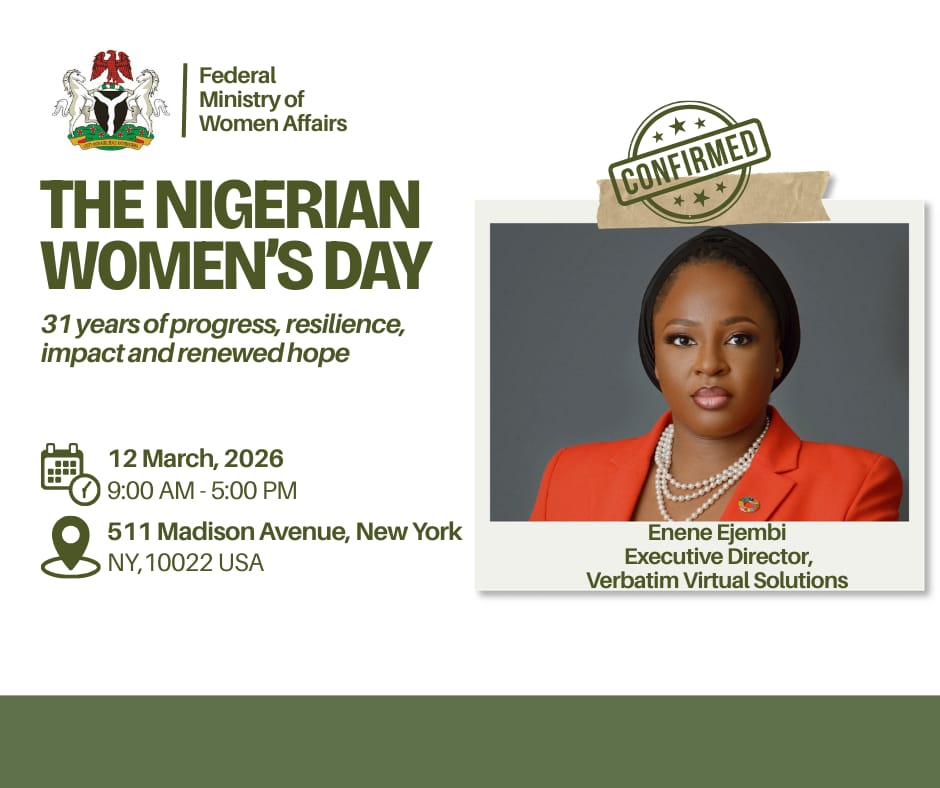
At the 70th session of the United Nations Commission on the Status of Women (CSW70) in New York, the Executive Director of Verbatim Virtual Solutions, Enene Ejembi, participated in the second edition of the Nigeria Women’s Day event to discuss the theme “Women’s Leadership, Peace and Security for Social Impact.”
Held on the sidelines of CSW70 and convened by the Honourable Minister of Women’s Affairs and Social Development, Imaan Sulaiman-Ibrahim, the event brought together policymakers, civil society leaders, and development practitioners to examine how women’s leadership strengthens governance, peacebuilding, and development outcomes in Nigeria and globally.
In her keynote speech, Honourable Minister Imaan Sulaiman-Ibrahim emphasised that women’s empowerment must be treated not as a social issue, but as a national development strategy. She presented the Real Hope Social Impact Intervention 774, a national initiative designed to deliver programs supporting women and families across Nigeria’s 774 local government areas through pillars such as energy, agriculture, digital inclusion, health, education, and leadership development.
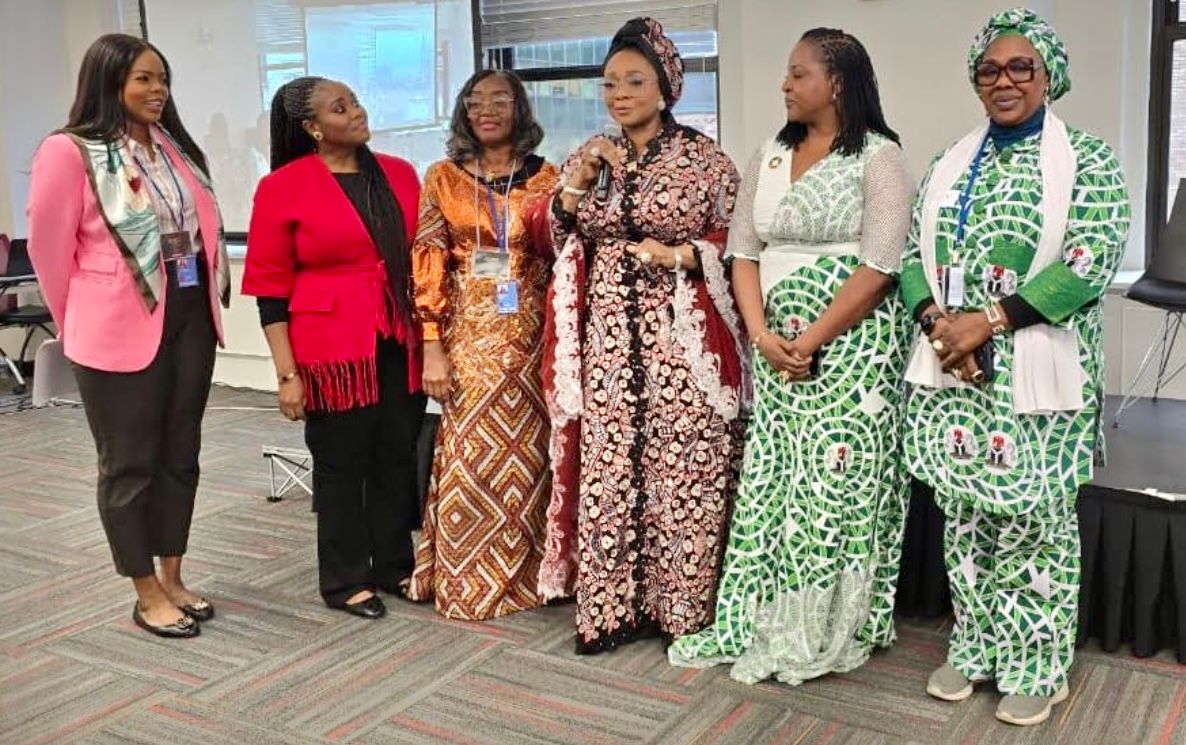
One of the panel sessions, themed “Women Leading Across Institutions and Platforms,”brought together women driving change across governance, security, civil society, and development sectors. Panellists included Founder of Women in Leadership Advancement Network (WILAN), Abosede George Ogan, Gender Adviser to the Inspector‑General of Police, AIG Aisha Abubakar‑Baju, Kemi DaSilva-Ibru, Executive Director, Verbatim Virtual Solutions, Enene Ejembi and the Abia State Commissioner for Women Affairs, Maureen Aghukwa.
The discussion highlighted how women are navigating and transforming institutions—bringing diverse expertise, lived experiences, and leadership approaches to spaces where critical decisions shaping societies are made.
Speaking during the session, Enene Ejembi underscored the urgent need to expand women’s participation in governance in Nigeria. She pointed to the country’s significant representation gap, noting that women currently hold about 3.9% of seats in Nigeria’s National Assembly, one of the lowest levels of women’s political representation globally. This stands in stark contrast to the global average of approximately 27.5% female representation in national parliaments.
“Nigeria offers a very clear example of the governance gap we are discussing today,” Ejembi said. “When representation in governance is that limited, the perspectives shaping national policy, peacebuilding efforts, and development priorities remain incomplete.”
Beyond highlighting the representation gap, Ejembi outlined practical pathways for expanding women’s leadership across political and institutional systems. She emphasized the importance of constitutional reforms that create structural opportunities for women, including proposed amendments that would introduce reserved seats for women in Nigeria’s National Assembly and state legislatures. Countries such as Rwanda and Senegal, she noted, have adopted similar affirmative measures that significantly improved women’s representation in governance.
She also stressed the importance of non-technical reforms, including encouraging women to openly embrace political ambition, participate actively within political parties, and build strong support networks through mentorship and collaboration.
“A lot of development solutions focus on technical design, but often what determines success is behaviour — women being willing to own their ambition, show up in political spaces, and support one another,” she noted.
Ejembi further encouraged women navigating family responsibilities not to disengage entirely from professional and public life during their child-bearing years, but to remain connected to networks and opportunities that enable them to re-enter leadership spaces later in their careers.
Also speaking during the session, AIG Aisha Abubakar Baju, Gender Adviser to the Inspector-General of Police, highlighted the challenges women in uniform face within traditionally male-dominated institutions. She noted that the Nigerian Police Force is increasingly taking deliberate steps to create more equitable opportunities for women within the institution.
“In the police, I realised it is just like the Nigerian society—patriarchal and male-dominated,” she said. “After about 30 years in service and now in this position as Gender Adviser, I have the opportunity to see whether we can drive meaningful culture change in the Nigerian Police Force.”
Abosede George-Ogan, Founder of WILAN, shifted the conversation toward the relationship between economic influence and political power, urging women to pay closer attention to ownership and financial flows. “Women need more money,” she said. “Follow the money and follow ownership. You can only influence what you have proximity to.”
She also stressed that numbers alone do not translate into power, despite women forming a majority of Nigeria’s population. “If numbers equated power, Nigerian women would be ruling,” she said. “What’s missing is collaboration and a shared agenda.” She warned against tokenism in leadership and urged women to build stronger alliances while paying closer attention to who controls resources and opportunities.
On the State level, the Abia State Commissioner for Women Affairs, Hon. Maureen Aghukwa, showed how policy and cash can transform women’s lives on the ground and build leadership, highlighting a World Bank‑assisted project that supports women in agriculture, particularly in cassava and oil production, as well as a ₦10‑billion SME grant from the state government.
“In Abia State, the major thing that has empowered our women is the Nigeria for Women Project,” she said. “The opportunities made them come together, and they were trained in leadership, because when you lead at the operating level, you learn how to lead other groups. Women in fashion, entertainment, and agriculture – all these sectors now have access to money,” she said.
A fireside chat between the Honourable Minister and United Nations Deputy Secretary-General Amina J. Mohammed reinforced the global importance of women’s leadership for sustainable development and democratic governance. Mohammed emphasized that gender equality is foundational to the success of the Sustainable Development Goals, noting that “without Goal 5, there are no SDGs.” She also underscored the importance of justice and inclusive leadership, stating that “if there is no justice for women, it is a country that is flying on half of the bird’s wings.”